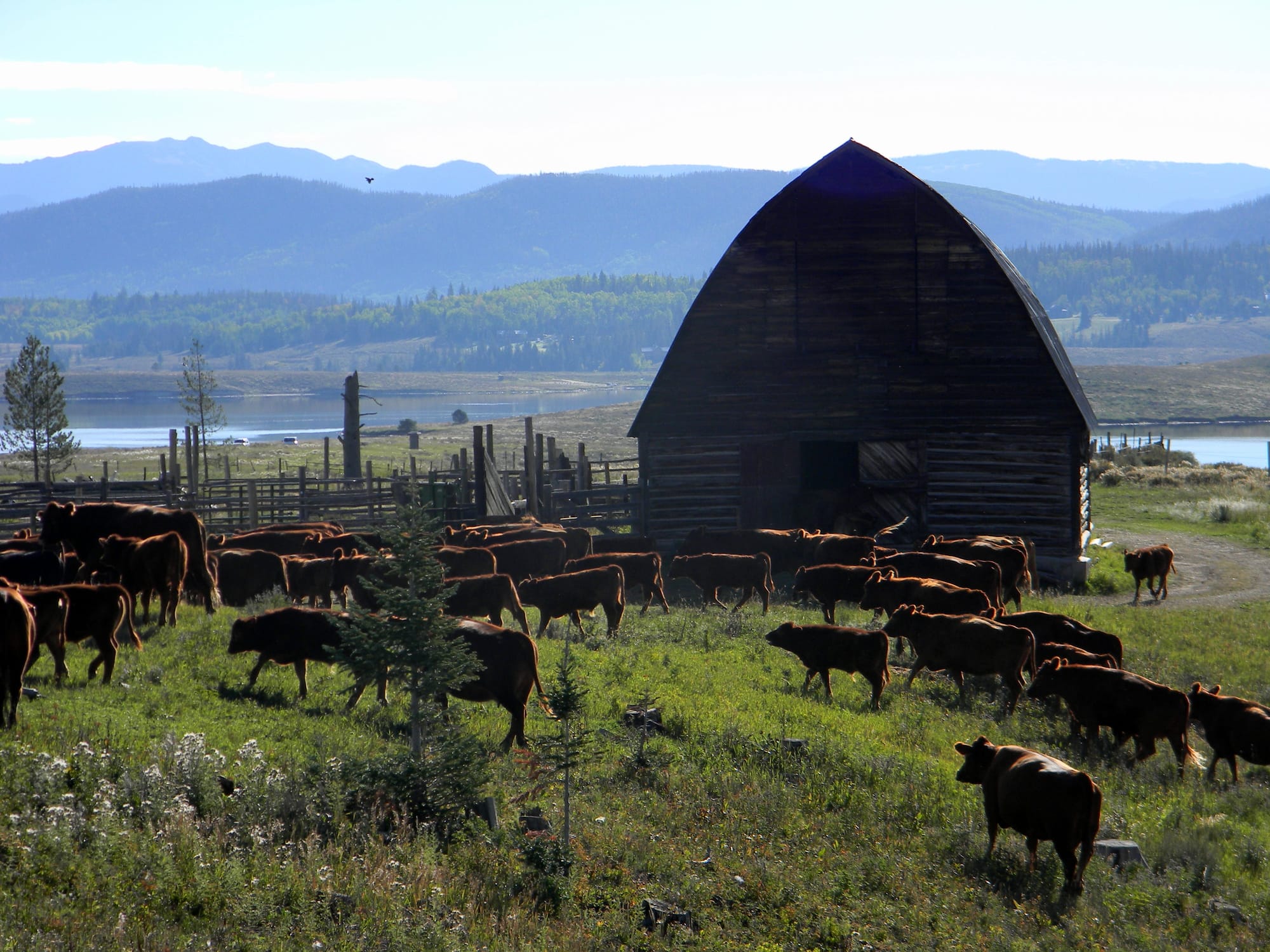
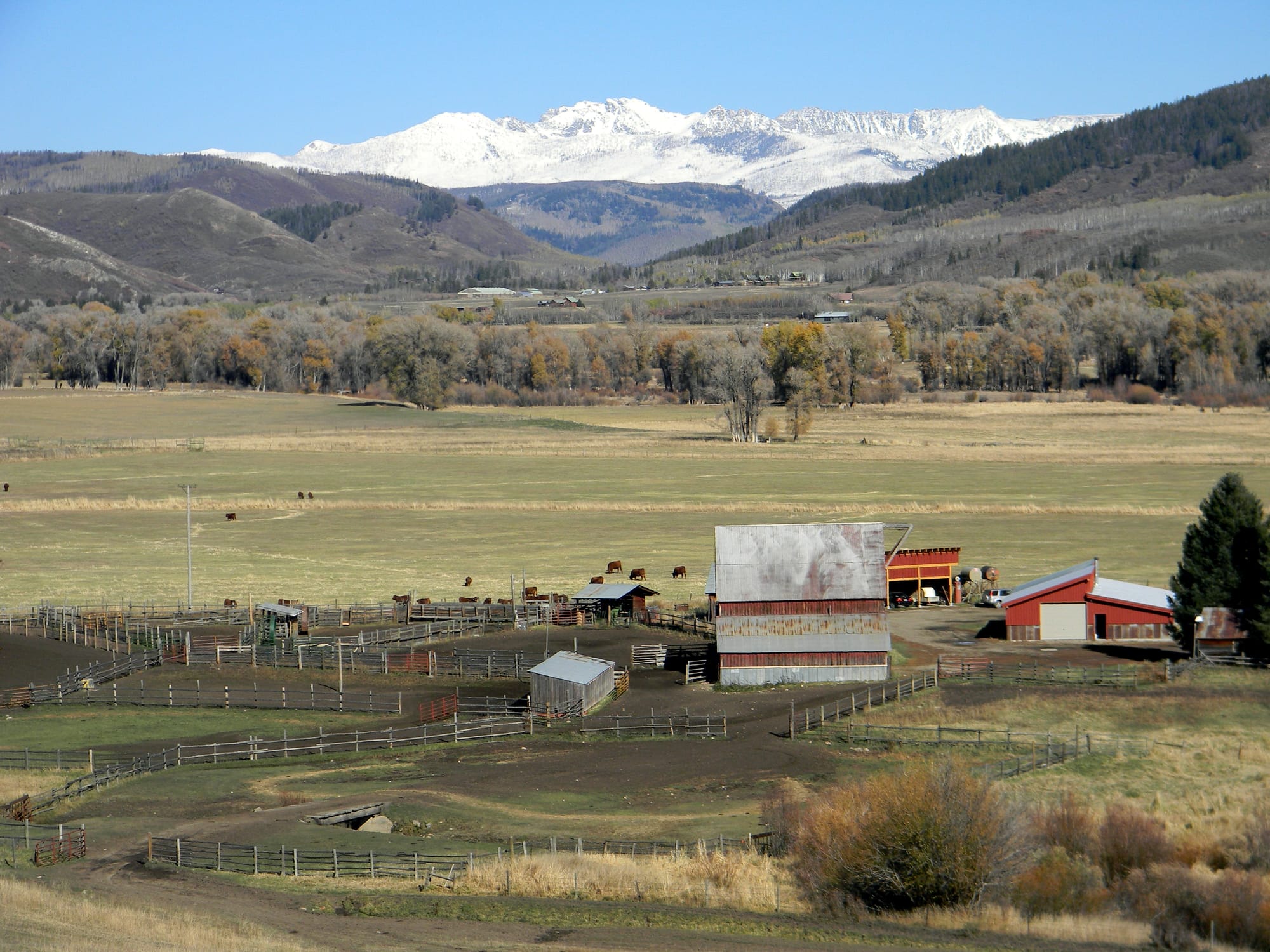
Jay Fetcher’s family cattle ranch in the small community of Clark, Colorado, has tracked the annual snowmelt off its meadow for 75 years. It’s one of several ways he marks seasons on the ranch — the waxing and waning of the hay crop, the birth of new calves and their rearing until they are sold to market, and the snowmelt that fills the streams, irrigates the grass, and sustains the herd all summer long. But climate change has brought warming temperatures and drought, and the snow that used to cover the fenceposts late into March and keep coming until May is now gone by early spring.
“What keeps me up at night now is — how are those streams, those springs going to keep running?” Fetcher wonders. He raised three daughters on the ranch, and hopes to pass it onto future generations. But if the water runs out, he asks, what will they do?
Fetcher is part of a group of Colorado ranchers with small, family-run operations arguing that major oil companies should help local governments pay for the costs of adapting to climate change. They have thrown their support behind a lawsuit brought by Boulder, Colorado against oil giants that will be heard by the U.S. Supreme Court on October 5. The outcome, they say, could affect their ability to continue ranching.
“What keeps me up at night now is — how are those streams, those springs going to keep running?”
Boulder’s lawsuit argues that ExxonMobil and Suncor Energy deceived the public about the climate crisis they knew would result from burning fossil fuels, and should be held accountable for a share of the climate damages local governments now face. Exxon and Suncor, a Canadian corporation that operates Colorado’s only oil refinery, are asking the justices to strike down the lawsuit before it can reach trial.
Whether municipal governments can recoup climate costs could make or break “a way of life that has been passed down and prized for generations” and has massively contributed to the state and nation’s economies, Fetcher and six other ranchers argued in a brief they filed in support of Boulder’s case.
From a years-long drought to extreme heat and an onslaught of devastating wildfires, the destabilized climate is creating near-impossible conditions for ranching across Colorado, and many small ranches are being forced to shut down for good. Unless local governments can recover some of the enormous climate expenses they are contending with, “it will become less possible for [them] to provide the services that still enable ranchers to keep going,” the brief argues.
“We cannot continue like this”
Deirdre Macnab, who practices regenerative ranching in Northwest Colorado, was shocked to learn that her Rio Blanco County commissioners were spending taxpayer dollars to back the oil companies’ case at the Supreme Court. In recent years, Macnab has seen warming temperatures wreak havoc on her community — ranchers who couldn’t irrigate their fields because of the drought, who have struggled to labor outside during dangerous heatwaves, whose cows were burned alive during massive wildfires, which destroyed their land and infrastructure for years to come.
“It's a very disturbing and painful time for people who are raising our food,” Macnab said. “The county seemed to be prioritizing the oil and gas industry over agriculture, which is a way of life here and a very important economic base for the community.”
Boulder’s lawsuit argues that Exxon and Suncor “concealed and misrepresented to the public what they knew” about climate change, allowing them to profit from the continued combustion of fossil fuels while passing the costs onto the public. The lawsuit claims the companies violated state law with their deceptive practices, and aims to make them compensate local governments for past and future climate damages and adaptation costs, and other possible remedies.
Exxon and Suncor claim that the case is a backdoor attempt to regulate greenhouse gas emissions, and that the Supreme Court should overturn the state ruling that allowed the case to continue moving toward trial.
Dozens of briefs have been filed to support both Boulder’s and the oil companies’ arguments. Eight counties in Northwest Colorado, including Macnab’s county, submitted a brief in favor of the oil companies, arguing that imposing liability on them “would threaten the stability of member county economies” who rely on them “for significant financial support.”
Macnab said she decided the Supreme Court should hear directly from another important industry in Northwest Colorado — food producers.
She reached out to other Colorado ranchers who she knew had been suffering the impacts of climate change and asked them to join in sharing their perspective with the court.
Another rancher who signed on is Kathryn Bedell, who lives and works in Mesa County. She also felt betrayed by the county’s decision to back the oil companies’ Supreme Court arguments. Local governments are “supposed to serve their citizens, not the oil and gas industry,” she said. (Mesa County Commissioner Cody Davis, reached for comment, said that the county’s participation “should not be viewed as an endorsement of any company or its past conduct,” but argued that local governments are improperly trying to address “decades of global greenhouse gas emissions” in state court.)
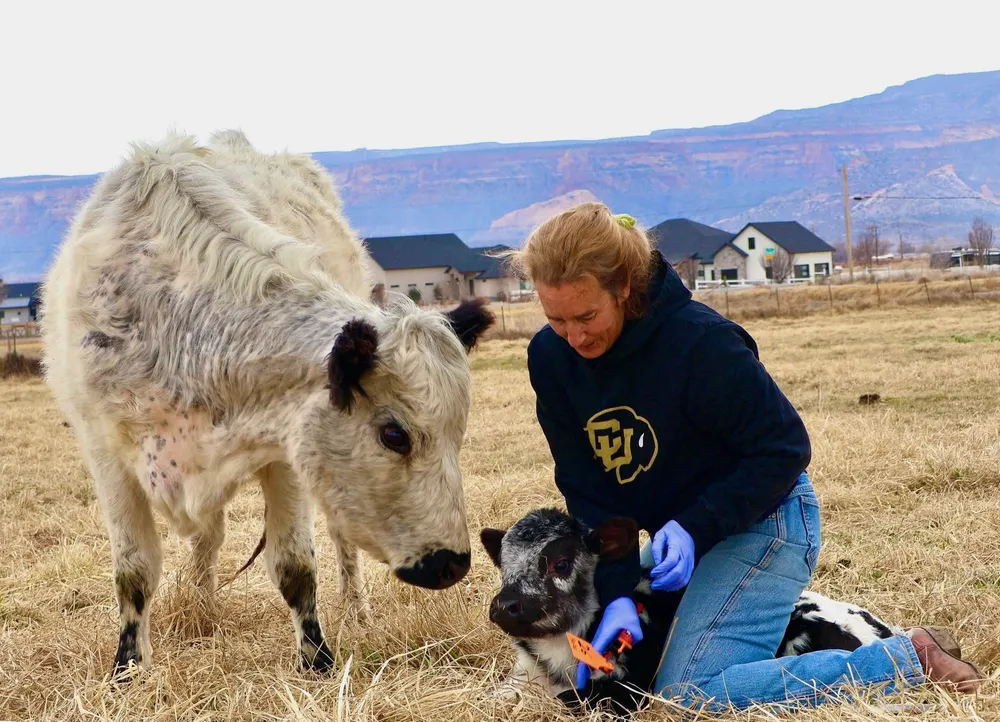
A veterinarian by training, Bedell has grazed cattle for nearly three decades in Northwest Colorado. She knows her herd well, from their distinct personalities to their family bloodlines. When the cows return to her house from pasture to calve in the winter, Bedell helps tend to their newborns.
She cherishes that period of rebirth. But the drought has destroyed her pastures, and she can’t afford to buy enough hay to feed her cows next winter. This year, she will have to sell off her entire herd.
“It’s traumatic,” said Bedell. “We cannot continue like this — we’re unable to make a living.”
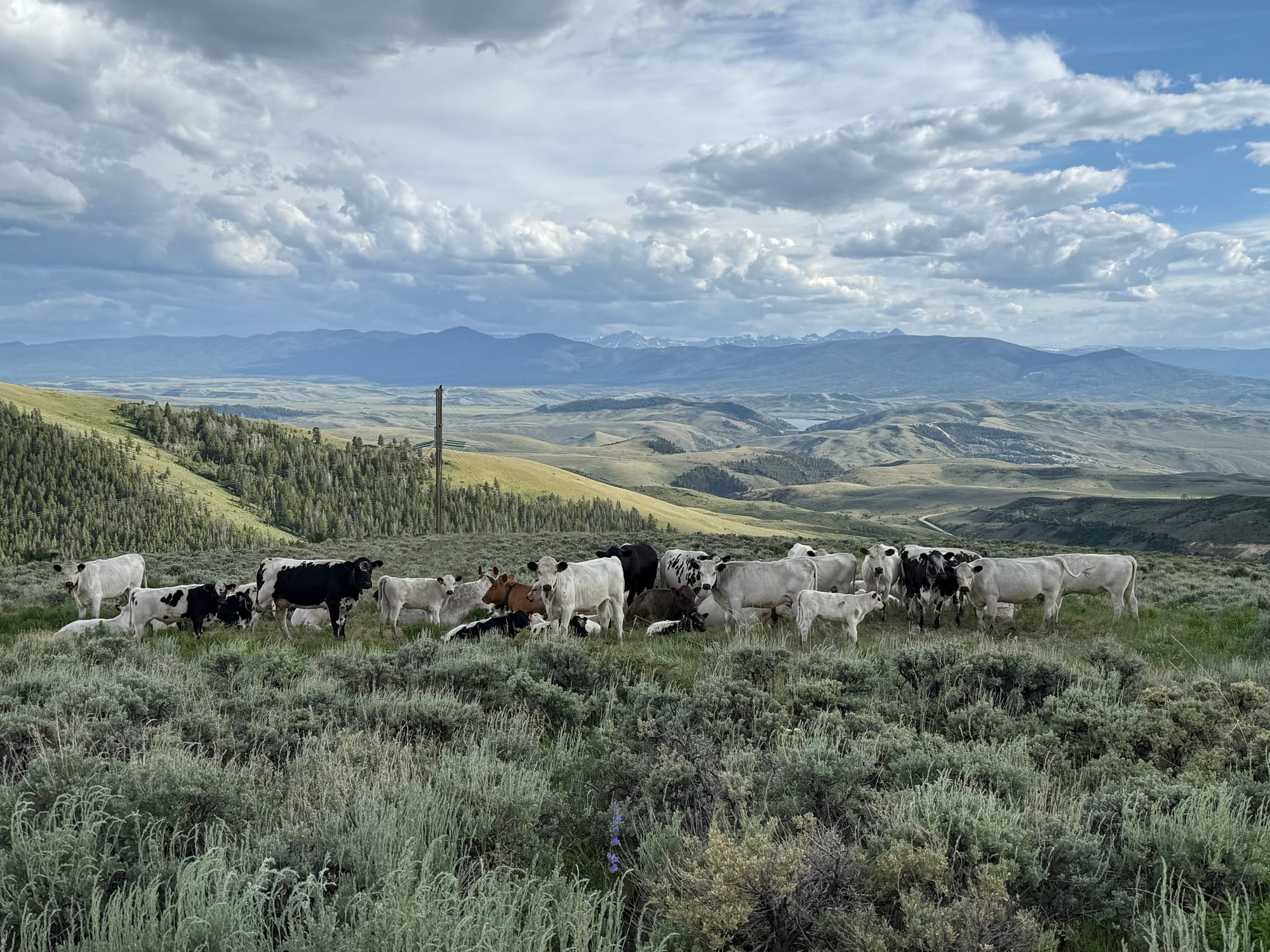
As an agricultural consultant and member of Colorado Agricultural Commission, Bedell has seen many other ranchers unable to maintain their herd sizes because of the “megadrought” that has parched the Southwest since 2000 and dried up reservoirs connected to the Colorado River.
Climate-fueled megadrought and wildfires threaten a major contributor to Colorado’s economy. Colorado agriculture generates about $47 billion annually and employs more than 195,000 people. Cattle and calves are the state’s top agricultural commodity. But between 2017 and 2022, Colorado lost nearly 3,000 farms and more farmland than any other state in the country, according to the Colorado Department of Agriculture.
“Faced with continually rising costs from unprecedented climate conditions, increasing numbers of ranchers are making the difficult decision to leave ranching.”
Exxon knew the crisis ranchers are now experiencing was coming decades ago, documents show. In a 1979 internal Exxon study, scientists warned senior executives that present trends of fossil fuel combustion, if continued, would lead to “dramatic world climate changes within the next 75 years,” including hotter temperatures and drought in southwestern states. The study cited an article by the Bureau of Land Management, quoting that “The flow of the Colorado River would diminish and the southwest water shortage would become much more acute.”
This is a world the ranchers now describe in their brief to the Supreme Court. “Colorado ranching has always been economically precarious […] but dried up water sources, parched pastures, and catastrophic destruction from fires and storms are currently pushing ranchers to the brink,” the ranchers wrote. “Faced with continually rising costs from unprecedented climate conditions, increasing numbers of ranchers are making the difficult decision to leave ranching.”
Local governments help keep ranching alive
The ranchers’ argument turns the caricature of anti-government rural America on its head: municipal services have been crucial to ranchers’ livelihoods, they say, especially as they have dealt with climate shocks. Local governments maintain and rebuild roads, lease land for grazing and hay production, provide water, help respond to wildfires, and recover infrastructure from other climate-fueled disasters.
But having to bear the local costs of climate change alone is taking a toll on those governments’ ability to support their communities, they say. Ranchers “fear that if municipal government keeps absorbing the increasing costs imposed by heat, drought, fires, and flooding, it will not be able to provide the services on which they depend to continue ranching,” their brief says.
The impacts and costs of climate change have deepened since Boulder first sued oil companies in 2018, warning that “climate change will bring more (and more serious) heat waves, wildfires, droughts, and floods to the State.” In 2021, the Marshall Fire in Boulder County became the most destructive in Colorado history, causing $2 billion in damage and leaving survivors in a years-long process of recovery. This summer, multiple other fires spread across the state; four of the largest fires cost state taxpayers $266 million, the state’s Drought Task Force said in July.
Climate change could cause an additional $37 billion in costs to Colorado between 2025 and 2050, including to public health infrastructure, upgrades to roads, bridges, and stormwater systems, and wildfire and flooding mitigation and response, according to a 2026 report from the nonprofit Colorado Fiscal Institute.
Actions by the Trump administration have heightened the stakes. The administration has canceled federal funding set aside for farmers and ranchers to implement climate-friendly practices and extreme weather resilience, and cut federal conservation experts that worked with local farmers. After Trump angered many U.S. ranchers by increasing beef imports, the Agriculture Department introduced a new “Ranchers First Initiative” in August, which promised that food producers could tap into emergency federal conservation programs to access speedier wildfire recovery. Whether Trump has decided to send federal disaster aid to the state has often depended on his political motivations at the time. On October 5, the Trump administration will join Exxon and Suncor in urging the Supreme Court to block Boulder’s case before it can reach trial.
Compensating local governments for climate costs like wildfire mitigation and recovery, repairing flood damage, and upgrading infrastructure — as Boulder’s lawsuit aims to do — is the “most feasible and appropriate hope for some redress,” the ranchers’ brief argues. “While it may not be feasible for ranchers to be compensated directly for their losses, keeping local government afloat can help to keep them afloat as well.”
The nationwide stakes of accountability
Communities and local businesses across the country are facing financial hardship fueled by climate change: farmers in Vermont, whose crops drowned in record-breaking floods; fishers and Native Hawaiian taro planters who lost everything to the deadly fires on Maui; businesses in Chicago reeling from outages during summer storms and heatwaves; childcare centers destroyed in California’s Eaton fire; Pacific Coast tribes, who have to relocate their entire communities thanks to rising seas.
They are all represented by one of dozens of other U.S. state, municipal, and tribal governments suing big oil and gas companies to try to recover billions of dollars in local climate damages. As with the ranchers, a ruling from the Supreme Court in Boulder’s case could help determine their ability to endure a warming world.
Similar to lawsuits against the tobacco and opioid industries, the cases rely on evidence that shows the companies deceived the public about their products’ harm. The lawsuits seek various remedies in addition to financial compensation, including for companies to change their marketing practices.
The Colorado ranchers’ predicament is a reminder of both the local stakes of the case and also the ways it could impact other communities around the country. Some local stakeholders in other parts of the U.S. worry what this case could mean for their own ability to hold corporate actors to account. “Faced with deceptive and injurious conduct, local governments have the responsibility to take action despite the efforts of wrongdoers to divert and delay,” argues another brief filed by the National Association of Counties and other municipal government groups. “The local government response should not be short-circuited.”
While oil companies are battling accountability on multiple fronts, communities and the ways of life that bind them face an uncertain future.
Fetcher, who founded the Colorado Cattleman’s Agricultural Land Trust to conserve nearly a million acres of ranch land, thinks about his eight grandchildren, and what they will inherit.
“I want them to have a good world, and come to the ranch in Clark, Colorado, to see water and green grass and snow,” he said. “I want them to understand our history, what we did, and why this place is special.”